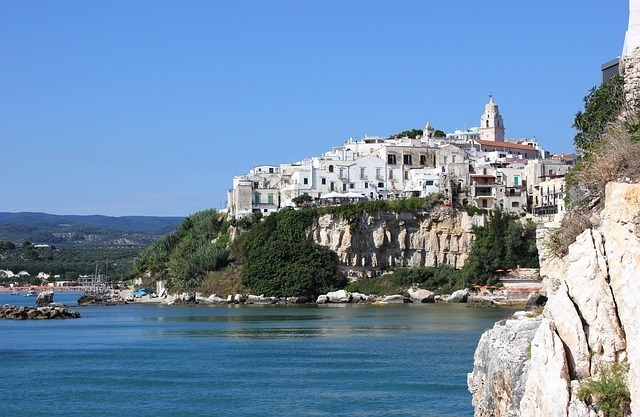
When you hear the word Puglia, you think of whitewashed villages. Unless you’ve really been to the Italian countryside, you won’t find such picturesque villages anywhere else. I can’t tell you that Puglia is one of the twenty Italian regions, the heel of the proverbial boot. I love all its character, when the beloved country is full of the shape of a built-in shoe.
Here you will see how the concept of seafood has been turned on its axis as you will see people swimming around rocks, finding something that looks like barnacles and diving in for lunch; that is, you will see fishermen using a rope with bread to catch small fish for dinner.
Here you will see how the concept of seafood has been turned on its axis as you will see people swimming around rocks, finding something that looks like barnacles and diving in for lunch; that is, you will see fishermen using a rope with bread to catch small fish for dinner.
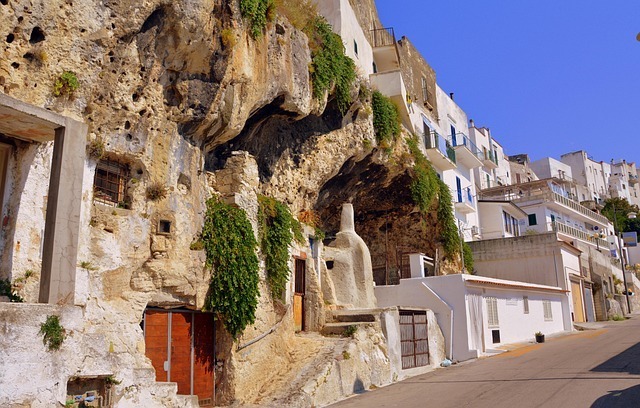
When traveling to Puglia, Italy, you will realize that Puglia has its roots underground. The magic begins in Puglia. As a traveler, you will travel above ground. But if you really want to understand the soul of this region, you have to travel and know it by heart.
Trulli of Alberobello
The town of Alberobella is a World Heritage Site. Recognized as a UNESCO World Heritage Site, the small stone village with its conical roofs is incredibly picturesque and extraordinarily beautiful. The church of Torullo is a must-see. Alberobella is a popular tourist destination, I recommend arriving early in the morning, or better yet, spending the night in Torullo.
Eat Bombette in Cisternino
Cisternino Borghi Pio Belli is one of the most beautiful towns in Italy. Perched on a hill overlooking fields and olive groves, the town has earned the nickname Bombette, or little bomb. Small restaurants attached to the town’s various butchers offer delicious meat rolls filled with cheese, mushrooms, and cured meats. You can order from the meat counter and then cook it yourself, enjoying it with wine or by the carafe.
Altamura is well known for its bread-making tradition, which uses centuries-old sourdough and is made in this incredibly old and very impressive wood-burning oven. The taste and consistency is something they are really proud of, and for good reason! The bread tasted amazing.
The Puglia region produces delicious full-bodied red wines, so while you’re here make sure you sample at least a glass of the two main varietals Primitivo and Negroamaro.
Although most shops in Italy are filled with vulgar touristy items, there are still some local items available. You might feel a little self-conscious when visiting here with your family.
There were people I knew there who talked to us for 30 minutes about the history of the building and the area in general. They had both lived there their whole lives, so of course they had very interesting perspectives on the city, how it had changed due to tourism (they were actually in favor of it) and Italian history and culture in general. This conversation alone made the trip worth it!
Magna Graecia
In the 8th century BC, Greek settlers settled in southern Italy, including parts of Puglia, as part of a wider expansion known as Magna Graecia. The coastal cities flourished as trading centers connecting Greece with the Italian peninsula.
The Greeks introduced advanced agricultural techniques, olive cultivation, and urban planning, which helped shape Puglia’s economy and landscape.
Roman rule
One of the most significant contributions of the Romans to Puglia was the Via Appia, an ancient road connecting Rome with the port city of Brindisi, and the region gained strategic importance due to its position as the gateway to the eastern Mediterranean.